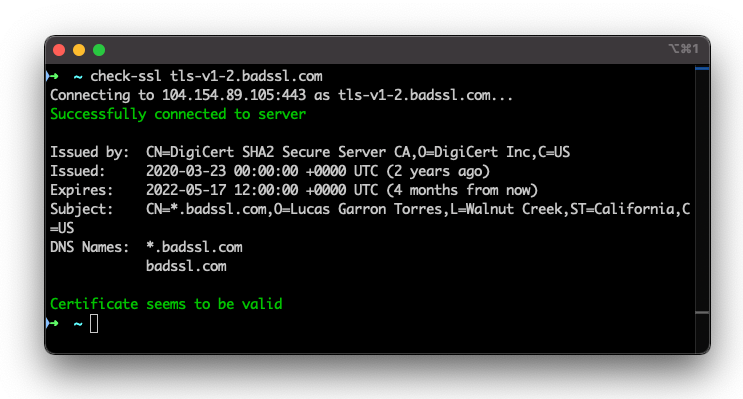
go-check-ssl is a simple command line utility to check the status of an SSL certificate.
Run check-ssl example.com and it establishes a TLS connection and reports back everything useful about the certificate it was served. It accepts bare domains, host:port pairs, full URLs, or raw IP addresses, and you can override the SNI to test a specific server behind a shared address.
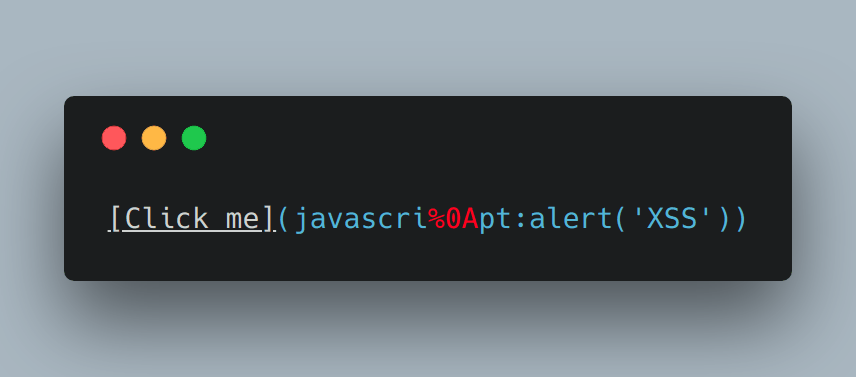
A cross-site scripting (XSS) vulnerability was found in the PHP League’s CommonMark library (league/commonmark) versions 0.15.6 through 0.18.x before 0.18.1. It allows remote attackers to insert unsafe URLs into <a> tags (even if allow_unsafe_links is false) by adding an encoded newline character in the middle (e.g., writing javascript as javascri%0Apt).
Version 0.18.1 has been released to fix this issue. All users are strongly encouraged to upgrade to this version.
Magento Commerce 1.9.0.0-1.14.3.7 (formerly known as Enterprise Edition)
Magento Open Source 1.5.0.0-1.9.3.7 (formerly known as Community Edition)
The patch contains fixed for several security vulnerabilities including cross-site request forgery (CSRF), Denial-of-Service (DoS), and authenticated Admin user remote code execution (RCE).
This project is a DIY touchscreen panel to arm/disarm Home Assistant’s alarm system. It’s powered by a Raspberry Pi, 3.5" touchscreen display, a custom Python-based application, and MQTT.
This talk educates junior and mid-level developers on common security vulnerabilities, how they are exploited, and how to protect against them. We'll explore several of the OWASP Top 10 attack vectors like SQL injection, XSS, CSRF, and others. Each topic will be approached from the perspective of an attacker to see how these vulnerabilities are detected and exploited using several realistic examples. We'll then apply this knowledge to see how web applications can be secured against such vulnerabilities.
The goal of this talk is to educate developers on common security vulnerabilities, how they are exploited, and how to protect against them. We'll explore several of the OWASP Top 10 attack vectors like SQL injection, XSS, CSRF, session hijacking, and insecure direct object references. Each topic will be approached from the perspective of an attacker to see how these vulnerabilities are detected and exploited using several realistic examples.

This talk educates developers on common security vulnerabilities, how they are exploited, and how to protect against them. We'll explore several of the OWASP Top 10 attack vectors like SQL injection, XSS, CSRF, and others. Each topic will be approached from the perspective of an attacker to see how these vulnerabilities are detected and exploited using several realistic examples. We'll then apply this knowledge to see how web applications can be secured against such vulnerabilities.
The goal of this talk is to educate developers on common security vulnerabilities, how they are exploited, and how to protect against them. We'll explore several of the OWASP Top 10 attack vectors like SQL injection, XSS, CSRF, session hijacking, and insecure direct object references. Each topic will be approached from the perspective of an attacker to see how these vulnerabilities are detected and exploited using several realistic examples.