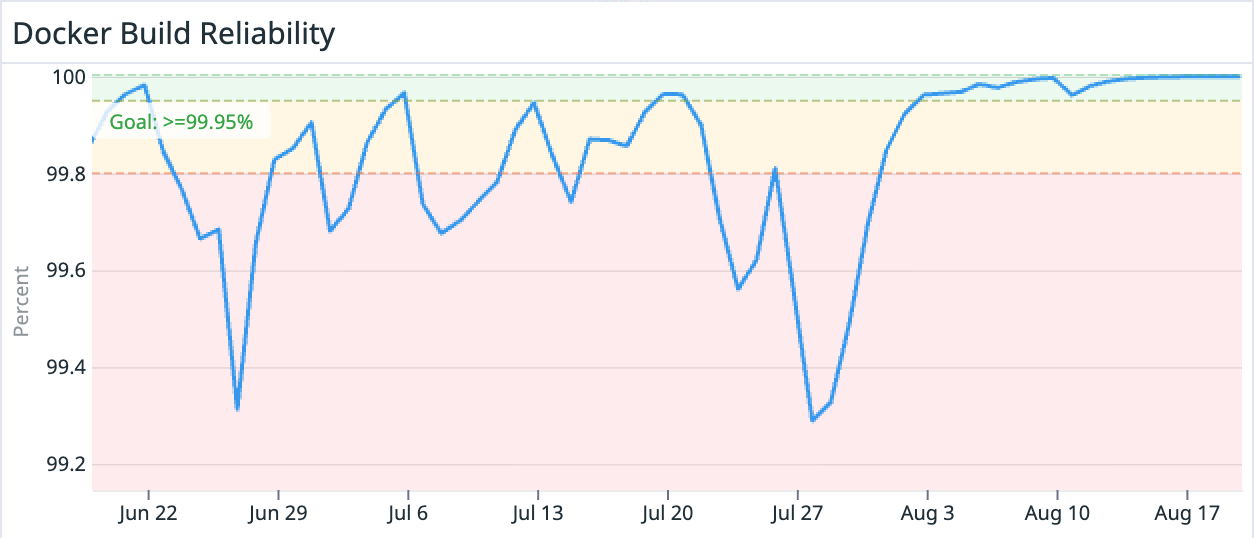
Sharing long-lived BuildKit instances across CI jobs cost us up to 4% of our container builds to unpredictable failures and noisy-neighbor contention. We replaced them with ephemeral, fully-isolated builders provisioned per job by a Kubernetes operator we’ve open-sourced, and build success now sits at 99.97%.
Define a BuildkitTemplate describing how your builders should be configured and scheduled, then create a Buildkit resource for each instance you need. The operator provisions a pod per instance and publishes its connection URL back into the resource’s status, so builds get a dedicated, isolated builder instead of contending over a shared one.
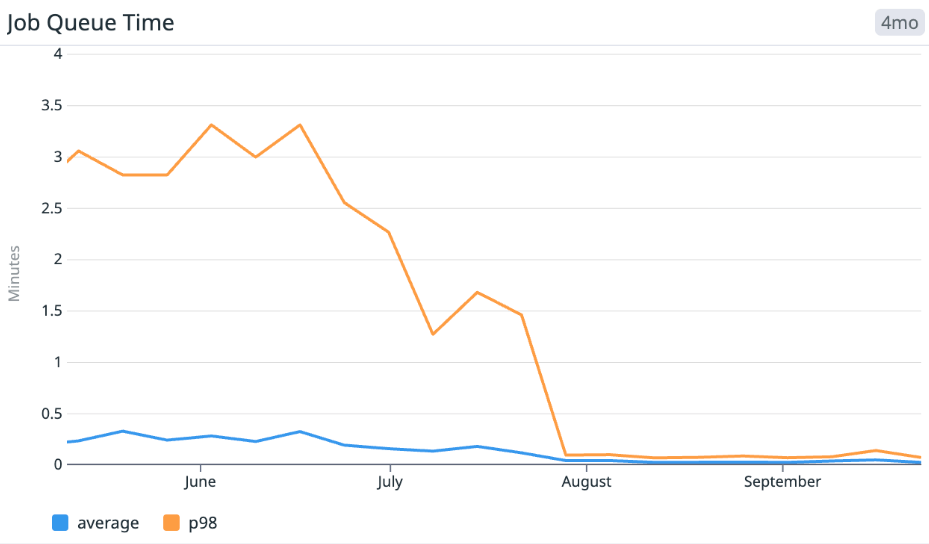
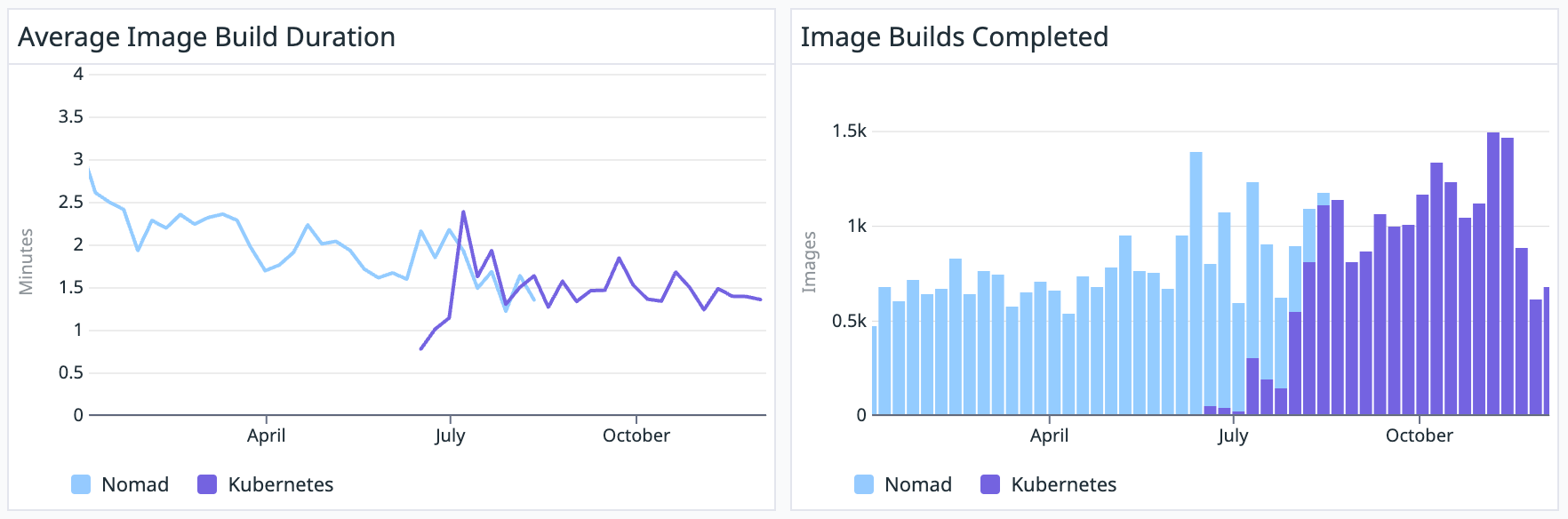
Moving our GitLab CI runners onto Kubernetes fixed the wasted capacity and queue bottlenecks, but the real wins came afterwards. Distributed caching in S3 and ECR, HPA-driven autoscaling, dedicated NVMe node pools, and reserved idle capacity took average job queue time from 16 seconds to 2 and cut cost per job by 40%.
Every CI job used to get its own EC2 instance and its own Docker daemon, which made docker build easy and everything around it painful — polluted state between builds, tightly-coupled infrastructure, and multi-arch builds only via slow emulation. Here’s how we evaluated Podman, Kaniko, and Buildkit, why Buildkit won, and what it took to make it behave under Kubernetes autoscaling.

A super tiny HTTP server that always returns the same response written in Go. Perfect for replacing a decommissioned service with a redirect, 404 error, or blackhole.
I had a Linear Z-Wave Garage Door opener - this feature was only available in the development branch of openzwave.
I wanted up-to-date device configurations for newer Z-Wave devices.
Unfortunately, the development branch was less stable than I liked and the opener never worked quite right. So #1 was no longer a reason to compile the library myself.